
AKSENOV RESEARCH GROUP GOAL:
Our goal is to investigate the molecular "dark matter" of living systems - the compounds that exist but are yet to be identified. We also develop methodologies to democratize mass spectrometry by making it cheaper, faster, and broadly accessible.
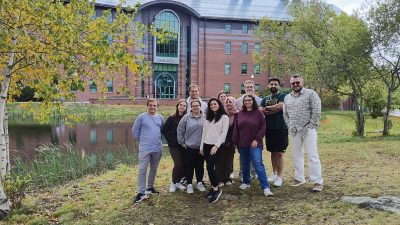
Aksenov Group Fall 2025
RESEARCH GROUP OVERVIEW:
Our group's research is in the field of metabolomics, which involves the study of small molecule processes that govern life's intricate biological mechanisms. We aim to understand the molecular diversity of life and how the molecular distributions change in living systems. Our focus is on "global" metabolomics, where we study living systems in situ and extensively sample them to capture their native complexity.
Mass spectrometry (MS) is a critical technology in metabolomics, and we use it in our research alongside advanced data analysis techniques to extract chemical knowledge from MS data.
PUBLICATIONS:
Secreted filarial acetylcholine analogs modulate parasite reproduction and host physiology
Lymphatic filariasis, caused by Brugia malayi, leads to chronic lymphatic dysfunction and lymphedema. The molecular mechanisms underlying interactions between filarial worms and their hosts remain poorly understood. Using untargeted metabolomics, we identify previously unknown acetylcholine analogs synthesized from leucine and isoleucine that are secreted by Brugia adult males. In the mammalian host, these metabolites selectively activate host M2 muscarinic acetylcholine receptors, alter lymphatic endothelial cell integrity, and trigger constriction of lymphatic vessels. These metabolites added to cultures also reduce microfilarial production in B. malayi and egg-laying in Caenorhabditis elegans, implying a role in regulating nematode reproduction. Their production is potently inhibited by ethacrynic acid, an existing FDA-approved drug. Our findings reveal a previously unexplored role for filarial-derived cholinergic signaling in parasite reproduction that impacts host lymphatic homeostasis. This work offers insights into the biochemical adaptations that function in the worm life cycle and reveals potential metabolic vulnerabilities in filarial worms.
Authors: Alexandra Grote, Lia Ficaro, Joseph Koussa, Rita A. Boateng, Daniela Chow, Johannes Morstein, Morgan E. Brisse, Jennifer Goldstein, Hongyu Wu, Yen-Chih Chen, Matthew Chung, Christopher Mederos, Niels Ringstad, Eric V. Dang, Alexander Aksenov, Heather D. Hickman, Denis Voronin, Dirk Trauner, Drew R. Jones & Elodie Ghedin
Publisher/Journal: Nature
Article Link: https://www.nature.com/articles/s41467-026-77090-2
Ordering molecular diversity in untargeted metabolomics via molecular community networking
Molecules in living systems are not random but are shaped by biological necessity. Mass spectrometry (MS) is a powerful tool for exploring these complex molecular landscapes. Molecular networking links metabolites by spectral similarity, but conventional methods leave many nodes disconnected. We introduce molecular community networking (MCN), which identifies natural molecular clusters and prunes them to keep the strongest links. The approach increases connectivity to about 95% of molecules and better captures structurally related compounds, including distinct ion forms and in-source fragmentation ions. MCN also improves the mapping of molecular space, helping distinguish true novel molecules from artifacts. Using MCN, we discovered dipeptide-conjugated bile acids associated with Bifidobacterium breve and proposed structures for previously unexplored N-acyl amides that interact with G protein-coupled receptors. We also built a global metabolome map from public GNPS/MassIVE data, covering about 8.4 million molecular features, creating a “roadmap” for molecular diversity.
Authors: Elizabeth A. Coler, Alexey Melnik, Ali Lotfi, Dana Moradi, Ben Ahiadu, Paulo Wender Portal Gomes, Abubaker Patan, Vincent Charron-Lamoureux, Pieter C. Dorrestein, Stephen Barnes, Vladimir Boginski, Alexander Semenov, Alexander A. Aksenov
Publisher/Journal: Cell Reports Method
Article Link: https://www.cell.com/cell-reports-methods/fulltext/S2667-2375(26)00168-2
S’Wipe: user-friendly stool collection for high-throughput gut metabolomics and multi-omics
The microbiome is increasingly recognized as a key factor in health. Intestinal microbiota modulates gut homeostasis via a range of diverse metabolites. In particular, molecules such as short-chain fatty acids (SCFAs), the microbial fermentation products of dietary fiber, have been established to be reflective of microbiome and/or dietary shifts, and SCFAs alterations have been linked to multiple gastrointestinal disorders, from cancer to colitis. Despite their potential as biomarkers, technical challenges in stool collection have limited clinical translation. Here, we present Stool Wipe (S’Wipe), an ultra-low-cost fecal collection method using lint-free, mass spectrometry (MS)-compatible cellulose wipes as toilet paper. Specimens are preserved in ethanol without refrigeration and can be shipped via regular mail. Mass spectrometry analysis demonstrated that S’Wipe captures both volatile and non-volatile metabolites with reproducibility and stability validated for diagnostically relevant molecules. We show that S’Wipe performs equivalently to direct stool collection, enabling interchangeable use and comparison with existing studies. This methodology is ideally suited for large-scale population studies, longitudinal tracking, and personalized medicine applications.
Authors: Dana Moradi, Ali Lotfi, Alexey V Melnik, Aleksandr Smirnov, Konstantin Pobozhev, Hannah Monahan, Evguenia Kopylova, Yanjiao Zhou, Alexander A Aksenov
Publisher/Journal: American Society for Microbiology — mSystems
Article Link: https://journals.asm.org/doi/full/10.1128/msystems.01459-25
News, Articles & Ongoing Projects:
Delving into the Boundaries of Chemical Research: Updates and Rewritten Articles from Aksenov Research Group, Featuring Current Student Projects
ONGOING PROJECTS
Discovering novel N acyl amides to bind to GPCRs
N acyl amides are a newly discovered lipid class that exists within both animals and humans. It has been previously studied that N-acyl amides can interact with GPCRs as either agonist or antagonists depending on what GPCRs are being looked at. From data collected from the American Gut paper which focused on gut samples taken from individuals different countries we were able to come up with predicted N acyl amide structures. We can use in silico docking predictions to test these proposed structures to come up with novel N acyl amides that can later be developed into GPCR agonists or antagonists.
Novel antifungal metabolism products from the interactions between Bacillus subtilis and Setophoma terrestris
The diversity of soil microbes results in extensive interspecies interactions. These communities play a major role in the ecosystem’s health and agricultural production. Bacillus subtilis, a diverse Gram-positive bacterial species found in the upper soil and plant rhizosphere, has been observed to interact with the soil fungus Setophoma terrestris, a major plant pathogen that affects economically important crops. In subtropical and tropical regions, S. terrestris has caused pink root disease in onions. Interestingly, the interactions between S. terrestris and B. subtilis ALBA01 resulted in metabolites associated with antifungal activity, such as surfactin and plipastatin. Using LC-MS and GC-MS based metabolomics, we can further look into the production of antifungal compounds whose nature remains unexplained. This project is a collaboration with Dr. Andrea Albarracin Orio at the Universidad Nacional de Córdoba.
Geisha Coffee flavor profiling on a molecular level
Coffee is one of the world’s most valuable beverages and agricultural commodities. Recent studies have revealed the diversity of microorganisms present during the process of coffee fermentation. This, along with the soil quality, influences the coffee’s flavor. Although the microbial diversity in the coffee fermentation process has been widely studied, the geisha variety (one of the most expensive and valuable coffees in the world) has been unexplored. Our goal is to determine the chemical differences between the different microbial communities within the endosperm of the coffee, and how fermentation influences the flavor profile. This project is a collaboration with the Dalling lab at the University of Illinois Urbana-Champaign and Hacienda la Esmeralda in Palmira, Panama.
UCONN NEWS:
-

“Olivia Rodrigo is one of the premier swearers in contemporary popular culture” might not be the type of analysis expected from top poli-sci profs
-
The Center for Pharmaceutical Manufacturing Modernization will support work to modernize pharmaceutical production and build a more efficient, sustainable, and resilient pharmaceutical ecosystem


- columns: 4
- offset: 1
- pictures: false
- number-of-posts: 2
- read-more-text: Continue Reading
- show-excerpt: true
- show-date: true
- safe-fetch: 1
- attempted-request: https://today.uconn.edu/wp-rest/wp/v2/posts?offset=1&posts_per_page=2&adjacent-posts=true&_embed
-
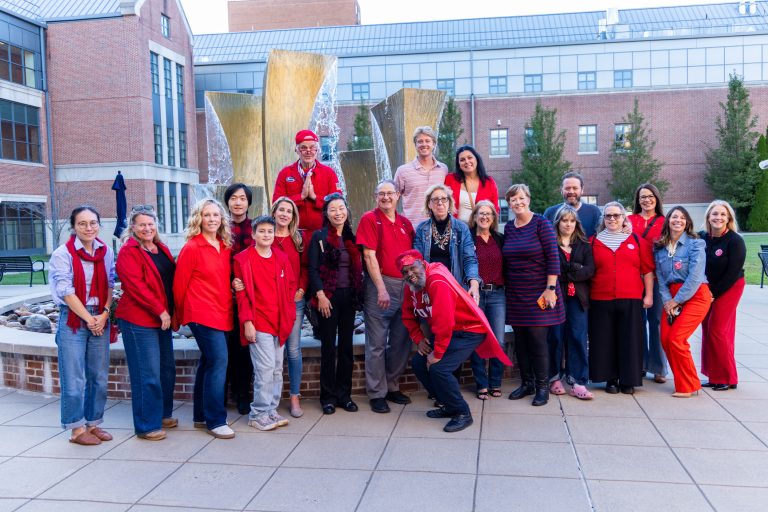
‘By illuminating familiar landmarks in red, the campaign helped spark conversations, increase public understanding, and show support for individuals with dyslexia’
- columns: 4
- pictures: true
- number-of-posts: 1
- read-more-text: Continue Reading
- show-excerpt: true
- show-date: true
- safe-fetch: 1
- attempted-request: https://today.uconn.edu/wp-rest/wp/v2/posts?posts_per_page=1&adjacent-posts=true&_embed